Individualised Educational Program and Assessment for Sebastian – Secondary
May 2026
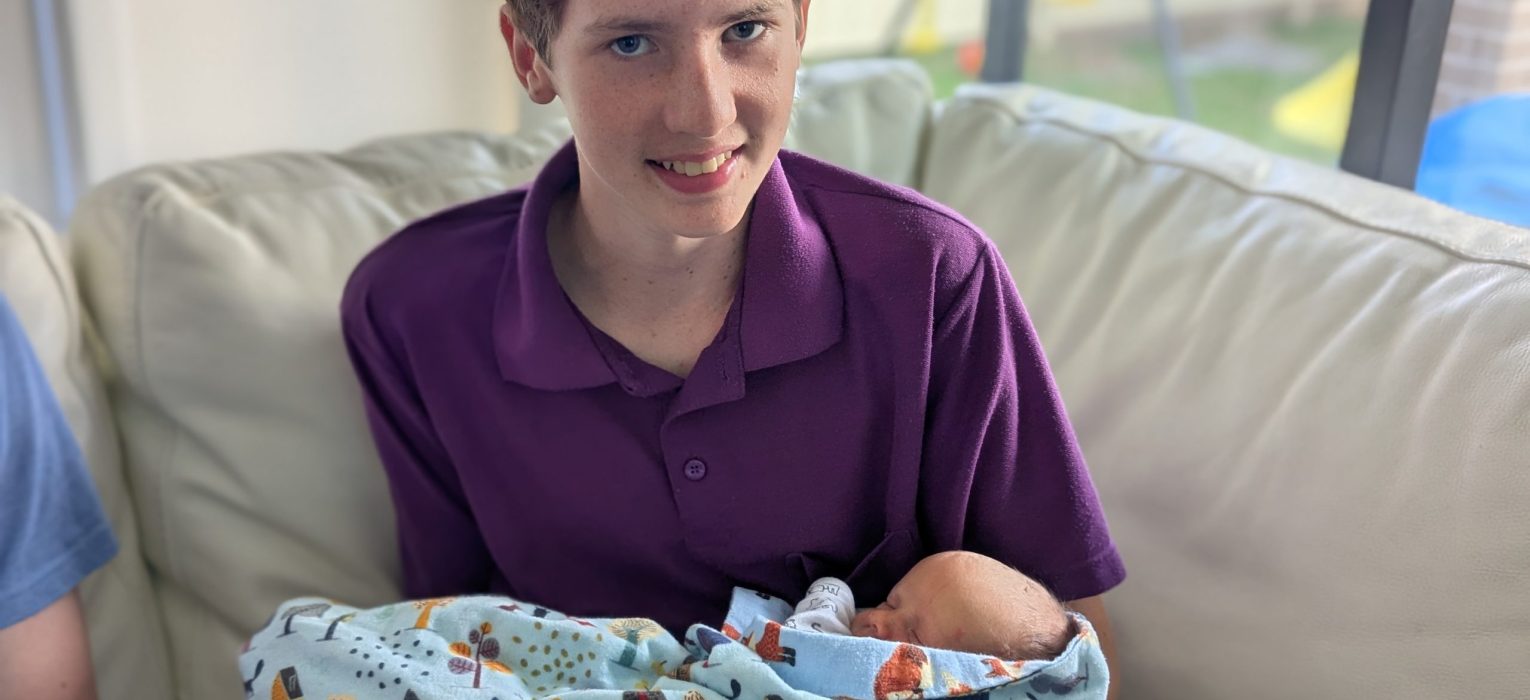
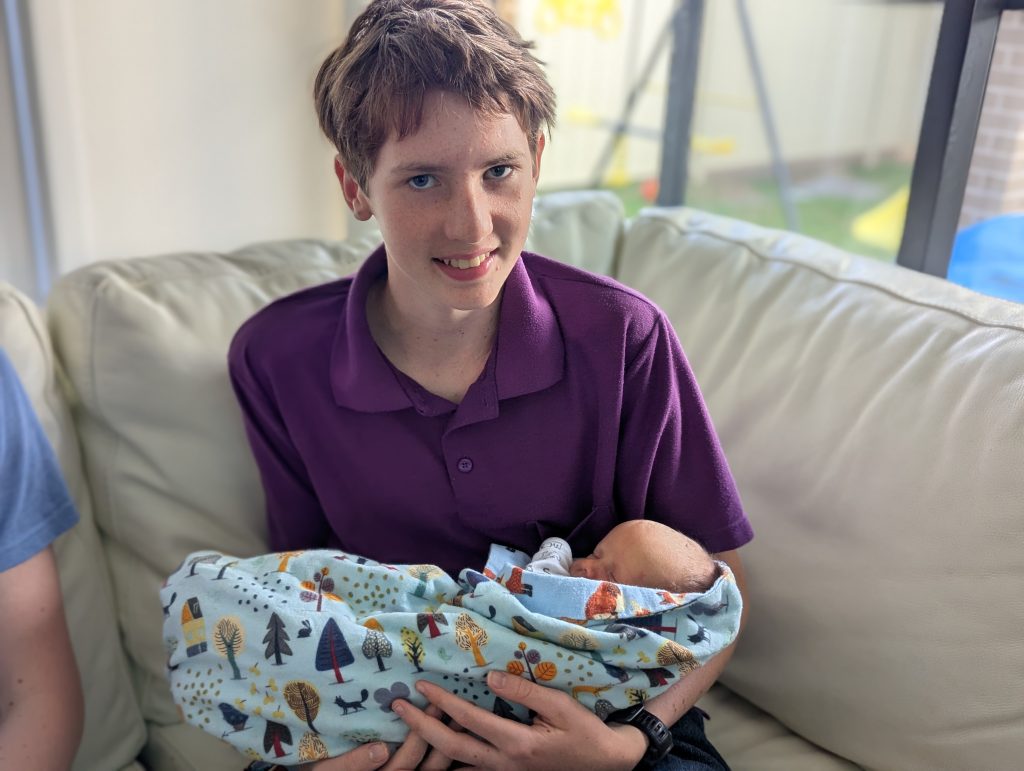
Sebastian is intelligent and diligent. He is conscientious about completing assigned tasks, he has solid mathematical skills and reads across a wide range of reading materials; his particular love is all things Nature. Sebastian is an entrepreneur and is keenly building his business acumen. Sebastian is an absolute delight.
English
Outcomes
- EN5-RVL-01
uses a range of personal, creative and critical strategies to interpret complex texts
- EN5-URA-01
analyses how meaning is created through the use and interpretation of increasingly complex language forms, features and structures
- EN5-URB-01
evaluates how texts represent ideas and experiences, and how they can affirm or challenge values and attitudes
- EN5-URC-01
investigates and explains ways of valuing texts and the relationships between them
- EN5-ECA-01
crafts personal, creative and critical texts for a range of audiences by experimenting with and controlling language forms and features to shape meaning
- EN5-ECB-01
uses processes of planning, monitoring, revising and reflecting to purposefully develop and refine composition of texts
Highlight last Year: Sebastian’s short story won a place in the highschool section for the Long Way Home Competition last year!
Sebastian reads extensively, engaging with a wide variety of literature. Last year, he set himself a goal to read 100 books, with a page length of over 300, and he just fell shy of that! This year Sebastian will be reading his way through a list of classic, history, science and Faith titles. He participates in a monthly Book Club hosted in our Lending Library, he has just been moved to the oldest teen group where he will be engaged in discussing books of a far greater depth. Our children love Book Club.
Our approach to English emphasises a love of reading and literature, with exposure to poetry, Greek mythology, Shakespeare, short stories, and works by Aboriginal & Torres Strait Islander authors. Daily Read Alouds are a cherished family ritual, providing opportunities for discussion and engagement with language. Socratic-style discussions are used to encourage deeper comprehension and critical thinking.
Last year we focused on Reading & Literature:
- Independent reading of a wide range of novels
- Exposure to classic and modern literature through Book Club and family Read Alouds
- Poetry: listening, reciting, and memorising
Grammar & Vocabulary:
- Sentence structure, tenses, and correct word usage
- Nouns, verbs, adjectives, homonyms, synonyms, antonyms, homophones, onomatopoeias
- Abbreviations and contractions
- Strengthening vocabulary
Writing & Composition:
- Narrations (oral and written) across multiple subjects
- Short story and paragraph construction
- Participation in weekly Writing Club, developing collaborative and independent writing skills
In the upcoming period we will also be covering:
Reading & Literature:
- Literary analysis: character, setting, plot, conflict, and resolution
- Figures of speech, description, rhyme, and metre in poetry
- Summarising, outlining, and paraphrasing skills
- Exposure to increasingly complex texts across genres
Grammar & Vocabulary:
- Continued focus on correct tense usage, word choice, and sentence structure
- Expanding vocabulary through figurative language, and descriptive writing
Writing & Composition:
- Developing complex story plots, characterisation, and conflict resolution
- Producing higher-quality written narrations, both oral and written
- Practising sequencing, parsing, and writing in multiple forms
- Continued participation in Writing Club and competitions, including the Clarence Valley Long Way Home Writing Competition and the Writing Club 2026 published book
Integration Across Subjects:
- Narrations and writing exercises connected to Faith, Geography, History, and Science
- Emphasis on extracting main points, sequencing, and presenting information clearly
Sebastian will continue to develop:
- Reading comprehension and critical analysis
- Written and oral communication skills
- Vocabulary, spelling, punctuation, and grammar
- Narration and summarising skills across multiple subjects
- Story planning, characterisation, and literary techniques
- Engagement with literature and ability to discuss texts critically
Resources include:
Our Town Library and Wattle Gum Library.
Cottage Press: Language Lessons for Grammar Students,
Voyages in English
Spelling Wisdom, Writing Prompt Cards and English for Australian Schools – Ridout, Writer’s Jungle, Institute for Excellence in English, Voyages in English
Mathematics
Outcomes
- MAO-WM-01Working mathematically
develops understanding and fluency in mathematics through exploring and connecting mathematical concepts, choosing and applying mathematical techniques to solve problems, and communicating their thinking and reasoning coherently and clearly
- MA5-FIN-C-01
solves financial problems involving simple interest, earning money and spending money
- MA5-FIN-C-02
solves financial problems involving compound interest and depreciation
- MA5-ALG-C-01
simplifies algebraic fractions with numerical denominators and expands algebraic expressions
- MA5-RAT-P-01
identifies and solves problems involving direct and inverse variation and their graphical representations (Path: Stn, Adv)
- MA5-RAT-P-02
analyses and constructs graphs relating to rates of change (Path: Stn, Adv)
- MA5-ALG-P-01
simplifies algebraic fractions involving indices, and expands and factorises algebraic expressions (Path: Adv)
- MA5-ALG-P-02
selects and applies appropriate algebraic techniques to operate with algebraic fractions, and expands, factorises and simplifies algebraic expressions (Path: Adv)
- MA5-IND-C-01
simplifies algebraic expressions involving positive-integer and zero indices, and establishes the meaning of negative indices for numerical bases
- MA5-IND-P-01
applies the index laws to operate with algebraic expressions involving negative-integer indices (Path: Adv)
- MA5-IND-P-02
describes and performs operations with surds and fractional indices (Path: Adv)
- MA5-EQU-C-01
solves linear equations of up to 3 steps, limited to one algebraic fraction
- MA5-EQU-P-01
solves monic quadratic equations, linear inequalities and cubic equations of the form ax3=k (Path: Adv)
- MA5-EQU-P-02
solves linear equations of more than 3 steps, monic and non-monic quadratic equations, and linear simultaneous equations (Path: Adv)
- MA5-LIN-C-01
determines the midpoint, gradient and length of an interval, and graphs linear relationships, with and without digital tools
- MA5-LIN-C-02
graphs and interprets linear relationships using the gradient/slope-intercept form
- MA5-LIN-P-01
describes and applies transformations, the midpoint, gradient/slope and distance formulas, and equations of lines to solve problems (Path: Adv)
- MA5-NLI-C-01
identifies connections between algebraic and graphical representations of quadratic and exponential relationships in various contexts
- MA5-NLI-C-02
identifies and compares features of parabolas and exponential curves in various contexts
- MA5-NLI-P-01
interprets and compares non-linear relationships and their transformations, both algebraically and graphically (Path: Adv)
- MA5-POL-P-01
defines, operates with and graphs polynomials and applies the factor and remainder theorems to solve problems (Path: Adv, Ext)
- MA5-LOG-P-01
establishes and applies the laws of logarithms to solve problems (Path: Adv)
- MA5-FNC-P-01
uses function notation to describe and graph functions of one variable and graphs inequalities in one and 2 variables (Path: Adv)
- MA5-MAG-C-01
solves measurement problems by using scientific notation to represent numbers and rounding to a given number of significant figures
- MA5-TRG-C-01
applies trigonometric ratios to solve right-angled triangle problems
- MA5-TRG-C-02
applies trigonometry to solve problems, including bearings and angles of elevation and depression
- MA5-TRG-P-01
applies Pythagoras’ theorem and trigonometry to solve 3-dimensional problems and applies the sine, cosine and area rules to solve 2-dimensional problems, including bearings (Path: Stn, Adv)
- MA5-TRG-P-02
establishes and applies the properties of trigonometric functions and finds solutions to trigonometric equations (Path: Adv)
- MA5-ARE-C-01
solves problems involving the surface area of right prisms and practical problems involving the area of composite shapes and solids
- MA5-ARE-P-01
applies knowledge of the surface area of right pyramids and cones, spheres and composite solids to solve problems (Path: Stn, Adv)
- MA5-VOL-C-01
solves problems involving the volume of composite solids consisting of right prisms and cylinders
- MA5-VOL-P-01
applies knowledge of the volume of right pyramids, cones and spheres to solve problems involving related composite solids (Path: Stn, Adv)
- MA5-GEO-C-01
identifies and applies the properties of similar figures and scale drawings to solve problems
- MA5-GEO-P-01
establishes conditions for congruent triangles and similar triangles and solves problems relating to properties of similar figures and plane shapes (Path: Ext)
- MA5-GEO-P-02
constructs proofs involving congruent triangles and similar triangles and proves properties of plane shapes (Path: Ext)
- MA5-CIR-P-01
applies deductive reasoning to prove circle theorems and solve related problems (Path: Ext)
- MA5-NET-P-01
solves problems involving the characteristics of graphs/networks, planar graphs and Eulerian trails and circuits (Path: Stn)
- MA5-DAT-C-01
compares and analyses datasets using summary statistics and graphical representations
- MA5-DAT-C-01
compares and analyses datasets using summary statistics and graphical representations
- MA5-DAT-P-01
plans, conducts and reviews a statistical inquiry into a question of interest (Path: Stn, Adv)
- MA5-PRO-C-01
solves problems involving probabilities in multistage chance experiments and simulations
- MA5-PRO-P-01
solves problems involving Venn diagrams, 2-way tables and conditional probability (Path: Adv)
Sebastian enjoys and is strong at Mathematics. He applies himself diligently, picks up new concepts quickly and easily masters them. He.is using Mathsonline, completing the “Path” stream, which provides a more advanced and rigorous approach to mathematical concepts. His studies align at an advanced level, with opportunities for extension into more complex problem-solving and algebraic reasoning.
Last year, Sebastian covered:
- Integers, fractions, and decimals
- Percentages increase/decrease
- Algebraic expressions, equations, and quadratics
- Cartesian plane
- Polygon angle sums
- Perimeter, area and volume
- Pythagoras
- Statistic: mean, median
- Experimental probability
- Simplifying ratios
- Expanding and factorising complex expressions
- Solving multi-step equations
- Graphing and interpreting linear relationships
- Properties of triangles and quadrilaterals
- Applying Pythagoras’ theorem in problem solving
- Simple probability calculations with reasoning
- Simple and compound interest
In the upcoming period, Sebastian will cover:
- Expanding and factorising complex expressions
- Parabolas (quadratic graphs)
- Trigonometry (sine, cosine, tangent)
- Surface area and volume of complex solids
- Scatter plots and correlation
- Tree diagrams
- Simple and compound interest
- Introduction to surds (simplifying radicals)
Sebastian will continue to develop:
- Mathematical reasoning and problem-solving strategies
- Ability to represent, analyse and interpret data
- Application of mathematical knowledge to practical and abstract problems
- Communication and justification of mathematical reasoning
- Spatial awareness and measurement skills across a range of contexts
Resources include: Maths Online, Kahn Academy, maths board games and our living maths books collection.
Science
Outcomes
- SC5-WS-01Working scientifically Observing
selects and uses scientific tools and instruments for accurate observations
- SC5-WS-02Working scientifically Questioning and predicting
develops questions and hypotheses for scientific investigation
- SC5-WS-03Working scientifically Planning investigations
designs safe, ethical, valid and reliable investigations
- SC5-WS-04Working scientifically Conducting investigations
follows a planned procedure to undertake safe, ethical, valid and reliable investigations
- SC5-WS-05Working scientifically Processing data and information
selects and uses a range of tools to process and represent data
- SC5-WS-06Working scientifically Analysing data and information
analyses data from investigations to identify trends, patterns and relationships, and draws conclusions
- SC5-WS-07Working scientifically Problem-solving
selects suitable problem-solving strategies and evaluates proposed solutions to identified problems
- SC5-WS-08Working scientifically Communicating
communicates scientific arguments with evidence, using scientific language and terminology in a range of communication forms
- SC5-EGY-01
evaluates current and alternative energy use based on ethical and sustainability considerations
- SC5-DIS-01
explains how an understanding of the causes of disease can be used to prevent and manage the spread of disease
- SC5-MAT-01
assesses the uses of materials based on their physical and chemical properties
- SC5-ENV-01
analyses the impact of human activity on the natural world
- SC5-GEV-01
describes the relationship between the diversity of living things and the theory of evolution
- SC5-GEV-02
explains how DNA is responsible for the transmission of heritable characteristics and can be manipulated through genetic technologies
- SC5-RXN-01
describes a range of reaction types
- SC5-RXN-02
explains the factors that affect the rate of chemical reactions
- SC5-WAM-01
describes the features and applications of different forms of waves
- SC5-WAM-02
explains the motion of objects using Newton’s laws of motion
- SC5-DA2-01
assesses the use of scientific knowledge and data in evidence-based decisions and when verifying the legitimacy of claims
Sebastian’s Science program is designed to develop his critical thinking, knowledge, and understanding of the biological, physical, and technological world. He is encouraged to cultivate a questioning mind and recognise the importance of scientific evidence in making informed and responsible decisions as an individual and as part of the community.
Sebastian and his sibling Siena demonstrate strong curiosity and enthusiasm for science, frequently pursuing knowledge independently. They watch scientific content, conduct experiments, record observations, and analyse results to understand the outcome. They engage in a variety of activities, including reading, documentaries, hands on investigations and constructing models using K’nex, Kapla and robotic kits.
Last year Sebastian’s studies included:
Biology:
- Characteristics of living things
- Plant and animal cells
- How organisms obtain and use energy
- Mendelian genetics
- Protists and fungi
- Roles in ecosystems
- Human body systems (circulatory, respiratory, etc.)
- Ecology: Interdependence of life
- Water and Carbon cycles
- Periodic Table & Chemistry Foundations:
- Historical attempts to organise elements (Triads, early grouping systems)
- Development of patterns in atomic properties
- Creation of the first widely accepted periodic table
- Discovery of predicted elements
- Atomic structure: electrons, protons, neutrons, atomic number
This period, his studies will include;
Chemistry:
- Definition of chemistry
- Matter and its properties
- Ancient ideas about matter and early attempts to understand substances
- Alchemists and their goals
- Work of Robert Boyle
- Law of Conservation of Mass
- Development of atomic theory (John Dalton)
- Elements, compounds, and chemical reactions
- Periodic Table:
- Atomic structure
- Organisation and patterns of elements
Physics:
- Energy transformation
- Forces in action
- Magnets and simple machines
- Simple machines
Energy
- Sources of Energy
- Electrical energy
Disease
- Homeostasis
- Infectious and non-infectious diseases
Genetics & Evolutionary Change
- DNA structure
- Genetic technologies
Reactions
- Chemical reactions
- Nuclear reactions
Data Science:
- Analysing and interpreting scientific data
Sebastian will develop and apply working scientifically, skills including:
- Planning and conducting investigations
- Making predictions and observations
- Recording, analysing, and interpreting data
- Evaluating outcomes and forming conclusions
- Using scientific knowledge to solve problems
Sebastian’s learning is flexible and inquiry-driven, allowing him to follow emerging interests and expand beyond the formal program.
Resources include: Singapore Science textbooks, Design curriculum materials, the John Hudson Tiner collection, science encyclopedias, home and town libraries, documentaries and online media, experiment kits, Snap Circuits, K’nex, Lego, Kapla blocks, Scratch coding, and robotics kits (Edison, Boson, Robobloq Qooper).
Human Society and its Environment (HSIE) – History
Outcomes
- HI5-CON-01
accounts for continuity and change over a period of time in relation to a historical context
- HI5-SPE-01
analyses the key features and structures of past societies, historical periods and events
- HI5-CPP-01
accounts for different contexts and perspectives of the past
- HI5-IEP-01
explains how significant ideas and events have shaped the past
- HI5-APP-01
explains Aboriginal Peoples’ experiences and perspectives related to their struggle for rights and freedoms
- HI5-SOU-01
integrates evidence from sources to develop historical accounts, explanations and arguments about the past
- HI5-INQ-01
assesses the value and limitations of sources as part of a historical inquiry
- HI5-COM-01
communicates historical arguments using historical terms and concepts for a range of purposes, audiences and contexts
Sebastian’s History program aims to develop his interest in “all things history” and to build his understanding of the Ancient, Medieval, and Modern world, including Australian history. He will develop the ability to explain the context of people’s actions in the past and to identify significant patterns of continuity and change in the development of the modern world and Australia.
In previous studies, Sebastian has explored topics including Roman Britain, the Early Medieval period, Elizabethan England, the English Reformation, and the Scottish monarchy.
This year, Sebastian will revisit and extend his studies of Australian history, with a focus on Federation to World War I, the Aboriginal Rights Movement, and Australia’s involvement in World War II. He will undertake an in-depth study of the Aboriginal Rights Movement, including assimilation policies, early activism, the 1967 Referendum, the Freedom Ride, the Wave Hill Walk-Off, the Mabo decision, and the movement’s impact and legacy.
Australian history will be studied in a broadly chronological sequence, exploring the experiences of both Aboriginal and Torres Strait Islander peoples and European Australians, and the development of the nation over time.
Following this, Sebastian will complete his studies of the Medieval world, and then undertake studies in Ancient history, including an indepth study of Ancient Greece. This will include the differences between Athens and Sparta, systems of government such as democracy and oligarchy, key philosophers including Socrates, Plato, and Aristotle, as well as Greek culture and mythology.
Sebastian will also undertake an indepth study of Ancient Rome. This will include its origins (Romulus and Remus), the structure of the Republic (consuls, senators, and assemblies), Roman law and citizenship, the Punic Wars, daily life including gladiatorial games, engineering achievements such as aqueducts and roads, the persecution of early Christians, the Latin language, and the fall of the Western Roman Empire.
Sebastian will develop historical skills including:
- understanding chronology and sequencing events
- identifying cause and effect
- analysing different historical perspectives
- recognising continuity and change
- discussing and reflecting on historical significance
.
Resources Include: Wattle Gum Education , History of Australia – Meredith Hooper, Freedom Ride – Sue Lawson, Ancient Men of Rome & Greece, and our extensive collection of historical living books and the town library.
Human Society and its Environment (HSIE) – Aboriginal Studies
Outcomes
- AST5-IDE-01
describes the diverse factors that contribute to an Aboriginal person’s identity
- AST5-IDE-02
explains ways in which Aboriginal Peoples maintain and celebrate identity
- AST5-CUL-01
analyses the diverse and dynamic nature of Aboriginal Cultures across time and location
- AST5-FCA-01
explains the roles and importance of families and Communities for Aboriginal Peoples
- AST5-SAA-01
explains the importance of self-determination and autonomy for Aboriginal Peoples
- AST5-ROL-01
analyses the significance of the roles of Aboriginal Peoples locally, regionally, nationally and internationally
- AST5-REL-01
explains factors that influence perceptions of Aboriginal Peoples and the range of relationships between Aboriginal Peoples and non-Aboriginal people
- AST5-DAT-01
applies appropriate Community consultation protocols and ethical research practices to gather, protect and interpret data
- AST5-INF-01
selects and uses a range of research methodologies and technologies to locate, select, organise and share information and findings
Sebastian’s Aboriginal Studies program aims to develop his knowledge and understanding of Aboriginal and Torres Strait Islander peoples, their cultures, histories, and lifestyles. He will explore the significant contributions of Aboriginal peoples to the development of Australia and its national identity, and develop an appreciation for the richness and diversity of Indigenous cultures.
As part of a cross-curricular approach, Sebastian will undertake an in-depth study of the Aboriginal Rights Movement within his History program. This will include assimilation policies, early activism, the 1967 Referendum, the Freedom Ride, the Wave Hill Walk-Off, the Mabo decision, and the movement’s impact and legacy.
Sebastian’s learning will be enriched through meaningful connections with the local Aboriginal community. Opportunities include engagement with members of the Gurehlgam Healing Centre, as well as local community members who are willing to share their knowledge and cultural understanding of both inland and coastal traditions. He will also learn through family and friend connections, including his sister in law who is a proud Gumbaynggirr woman.
Sebastian will develop:
- Respectful understanding of Aboriginal cultures and perspectives
- Awareness of historical and contemporary issues
- Understanding of the impact of colonisation
- Appreciation of cultural knowledge, traditions, and connection to Country
- Ability to reflect on differing perspectives and experiences
Resources include: local community connections, family members and friends, The Biggest Estate on Earth by Bill Gammage, our extensive collection of historical living books and the town library.
Technological and Applied Studies: Food Technology
Outcomes
- FT5-SAF-01
applies safe work and management practices through food design and production processes
- FT5-COM-01
communicates ideas, concepts and solutions in food design and production contexts
- FT5-FPP-01
selects and justifies the use of food preparation and presentation practices
- FT5-USE-01
selects and applies ingredients, techniques and equipment in food design and production contexts
- FT5-IET-01
explains industry practices and emerging technologies used in food design and production
- FT5-NSA-01
assesses how nutrition, food selection and availability influence individuals and communities
- FT5-ENV-01
analyses relationships between food production systems, sustainability and society
Sebastian’s Food Technology program is designed to develop his knowledge, understanding, and skills in food preparation, nutrition, and informed food choices. His learning is grounded in practical, real-life experiences within the home and community.
Sebastian already takes an active role in weekly food preparation and is capable of producing a variety of meals for a family of eight to eleven. This year, he will continue to be regularly involved in cooking and baking, expanding his repertoire and refining his practical skills.
Sebastian will take increased responsibility in menu planning and food selection for the family. He is actively involved in monthly shopping, where he considers budgeting, value for money, and availability, and makes decisions based on cost and practicality. He will continue to develop these skills, alongside an understanding of nutrition, balanced diets, and the environmental impact of food choices, including food sustainability and carbon footprint.
A strong emphasis will be placed on safe food handling and hygiene practices, ensuring Sebastian can confidently and safely prepare food in a variety of contexts.
Sebastian benefits from guidance and support from his aunt who is a Food Technology teacher and Department Head, providing additional insight into food preparation, nutrition, and industry practices.
Sebastian will develop:
- Practical food preparation and cooking skills
- Meal planning and budgeting skills
- Understanding of nutrition and healthy food choices
- Knowledge of food safety and hygiene practices
- Awareness of sustainability and environmental impacts of food
- Ability to make informed consumer decisions
Resources include:
- Family kitchen and weekly meal preparation
- Meal planning and shopping experiences
- Guidance from a Food Technology teacher (aunt)
- Cookbooks and family recipes
- Local grocery stores and markets
- Online recipe platforms and instructional videos
- Community knowledge and shared cooking experiences
Personal Development, Health and Physical Education (PDHPE)
Outcomes
- PH5-MSS-01
refines and transfers movement skills and concepts for adaptation in a range of dynamic movement environments
- PH5-MSS-02
selects, implements and justifies strategies and actions to solve movement challenges
- PH5-SHP-01
designs, implements and evaluates plans to enhance safety, health and participation in lifelong physical activity
- PH5-SMI-01
evaluates and adapts self-management and interpersonal skills to manage complex situations
- PH5-SHW-01
analyses the interrelationship between contextual factors, attitudes and behaviours to promote safety, health and wellbeing
- PH5-IPS-01
evaluates the effectiveness and suitability of health information, products and support services for improved individual and community safety, health and wellbeing
- PH5-RRL-01
evaluates and applies strategies for promoting and maintaining safe and respectful relationships in a range of contexts
- PH5-IBC-01
analyses how identity and a sense of belonging contribute to the health and wellbeing of individuals and communities
Sebastian’s Personal Development is supported by the values upheld within our family, grounded in our Catholic faith. He is encouraged to develop confidence and resilience, recognise his inherent dignity and worth, and apply strategies to support both himself and others. Sebastian is guided to make safe and responsible choices, remove himself from harmful situations, and treat others with kindness, respect, and generosity, reflecting Christian charity in his interactions.
Sebastian actively participates in and connects with his local community through homeschool, church, and running groups. These environments provide regular opportunities to build respectful relationships, practise cooperation, and develop social and emotional skills across a wide range of age groups.
His program also includes the development of his spiritual life, deepening his personal relationship with God and increasing his understanding of faith and the Church.
In the area of Physical Activity, Sebastian is developing habits that support a healthy and active lifestyle. He participates in a range of activities that build endurance, coordination, and skill. Sebastian is a keen runner and participates regularly in Parkrun events with family and the wider community, as well as completing additional midweek runs averaging 5km. He also participates annually in home education Swimming and Sports Carnivals.
Sebastian continues to develop movement skills and applies these in a variety of physical contexts. He is also building his understanding of health, including personal hygiene, nutrition, and the importance of maintaining physical and mental wellbeing. He is encouraged to consider the impact of lifestyle choices on himself and the broader community, including both positive and negative outcomes.
Sebastian will continue to reflect on his personal growth and wellbeing through discussion and real-life application of strategies.
Sebastian will develop:
- Confidence, resilience, and decision-making skills
- Social and interpersonal skills
- Understanding of health, wellbeing, and lifestyle choices
- Physical fitness, coordination, and movement skills
- Ability to reflect on personal wellbeing and growth
Resources include: Community participation (church, homeschool groups, running events) Liturgical Year Resources, saints biographies, Catechism, Family discussions and real-life application
